Battery Power & Duty Cycles: How to Match Your Excavator to the Shift
In this article:
- Machine endurance depends on duty cycle rather than simple shift hours.
- Intermittent work allows electric motors to pause power draw, stretching battery runtime across full working shifts.
- Midday DC fast charging bridges the energy gap for heavy, continuous digging projects.

1.
How Do Jobsite Duty Cycles Influence Machine Selection?
Machine selection comes down to duty cycle rather than simple shift hours. How continuously your machine cycles determines whether electric fits your workflow or if diesel remains necessary.
Because an electric motor stops drawing energy the moment the movement stops, jobsites with natural operational pauses allow electric machines to stretch battery life across a full working day. Unbroken, high-load work profiles require a different approach.
- Intermittent Duty Cycles: Utilities, roadworks, landscaping, and urban construction involve frequent pauses for site measurements, material alignment, or waiting for transport trucks. Power draw drops to zero during these non-active intervals, aligning standard battery capacities with full 8-to-10-hour daily shifts.
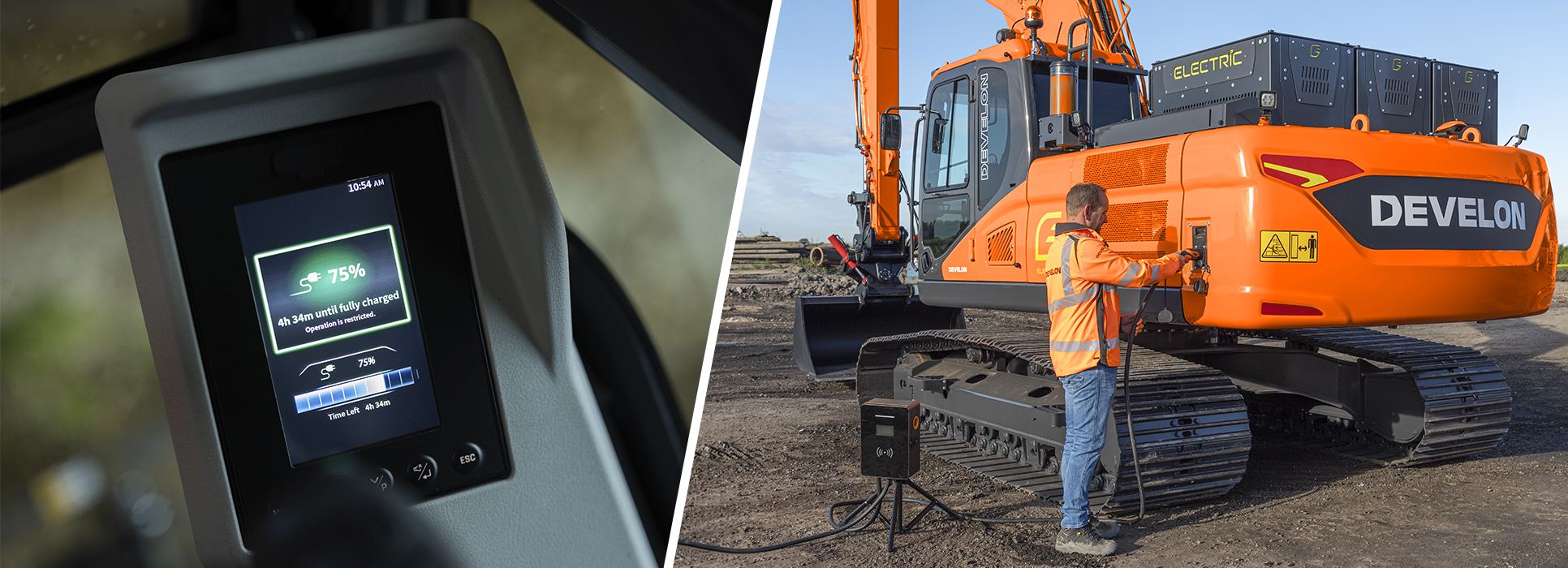
- Continuous High-Load Cycles: Mass excavation, continuous truck loading, or non-stop hydraulic breaker work demand unbroken high power draw. Under uninterrupted loads, battery reserves drain faster, requiring a planned midday DC fast-charge during operator breaks — or traditional internal combustion power where charging infrastructure is absent.
2.
Indicative Runtimes Across the Develon Range
| Model | Category | Indicative Operating Time | Ideal Application Profile |
|---|---|---|---|
| DX23E-7 | Mini Excavator | Up to 8 hours | Indoor renovation, urban utility, landscaping |
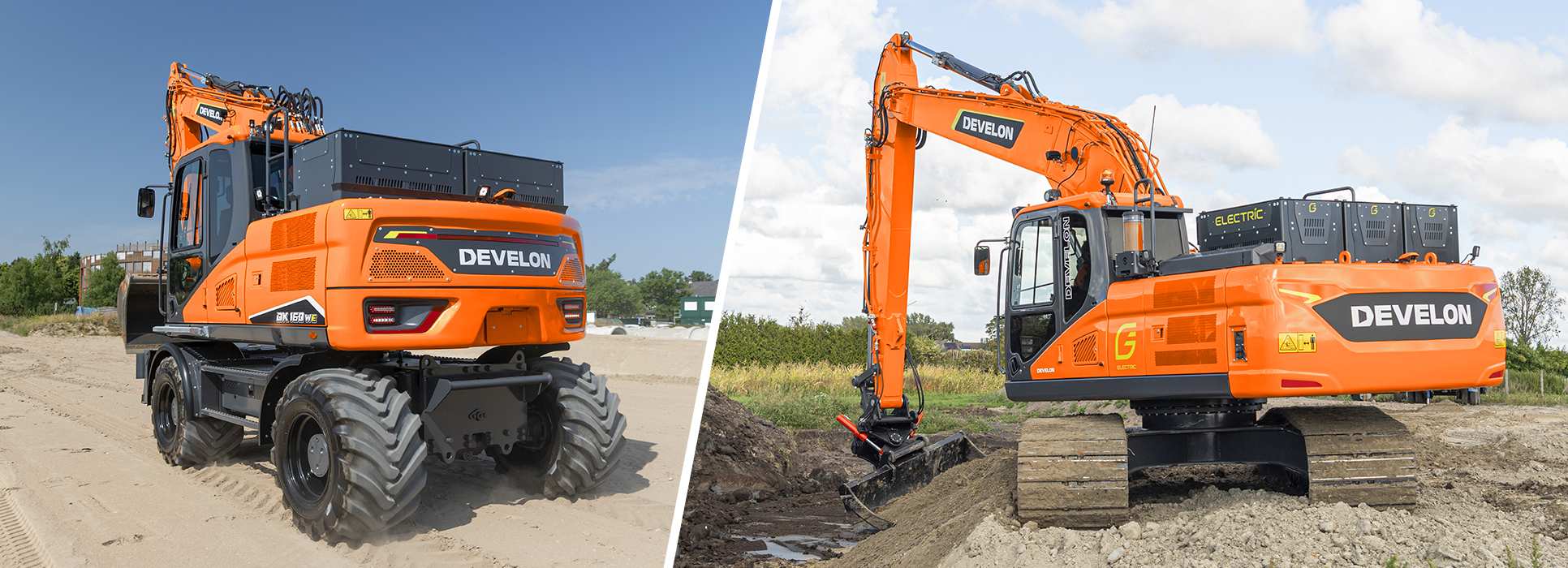
| DX160WE-7K | Wheeled Excavator | Up to 10 hours | City roadworks, municipal utility, multi-site urban tasks |
| DX230LCE-7 | Crawler Excavator | Around 9 hours | General earthmoving, residential development |
| DX250LCE-7 | Crawler Excavator | Up to 12 hours | Heavy earthmoving, commercial construction, long shifts |
(Note: Actual runtime varies based on ambient temperatures, hydraulic load, attachment usage, and operator technique.)
3.
Operational Cost Drivers & Maintenance Reality
Electric excavators carry a higher initial acquisition price. On subsidised markets, it is often possible to lower the final purchasing price. Lower maintenance expenses bring additional improvement of the total cost of ownership.
4.
Maintenance Scope & Scheduled Downtime
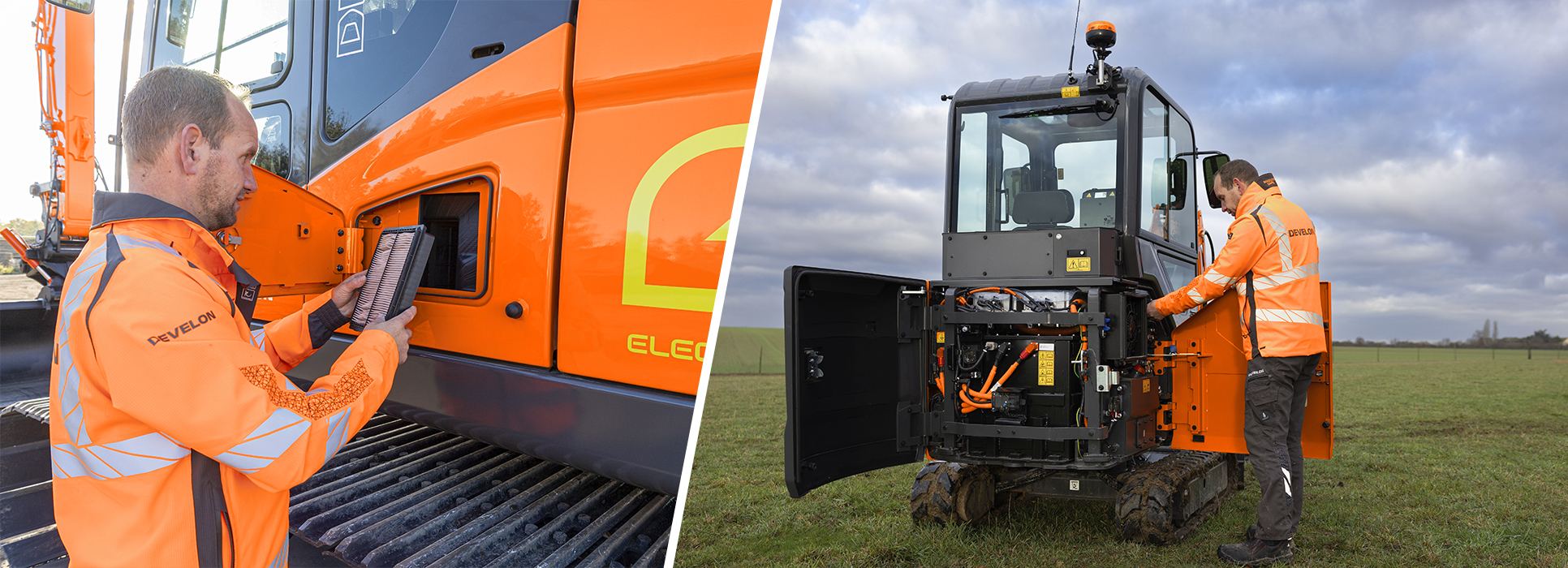
Electric machines eliminate internal combustion maintenance. However, mechanical upkeep of the chassis and hydraulic systems remains identical to diesel models:
- Eliminated Service Items: Engine oil, oil filters, fuel filters, air pre-cleaners, AdBlue® (DEF) fluids, and forced DPF regeneration downtime.
- Retained Service Items: Daily grease points, track/undercarriage tensioning, swing bearing lubrication, hydraulic fluid/filter changes, and bucket wear parts.
5.
Battery Specifications (LiFePO4)
Heavier models — including the DX160WE-7K, DX230LCE-7, and DX250LCE-7 — utilise Lithium Iron Phosphate (LiFePO4) chemistry. Selected for high thermal stability and cycle durability under heavy discharge loads, this battery type is designed to minimise capacity degradation over multi-year fleet lifecycles.
6.
Fleet Manager’s Checklist: Making the Transition
Before adding an electric excavator to your fleet, evaluate the following on-site prerequisites:
- Power Infrastructure Audit: Verify available grid capacity (400 V 32A/63A standard socket access) or budget for a mobile BESS (Battery Energy Storage System) unit on off-grid sites.
- Workload & Duty Cycle Assessment: Analyze your specific daily operation rather than relying on standard shift hours. Baseline battery endurance depends directly on jobsite load intensity, continuous hydraulic draw, and available charging windows.
- Operator Best Practices: Train operators on energy-conscious operation and setting up midday opportunity charging during mandatory shift breaks.